The UK is expanding the scope of its social media ban for users under 16, which may include YouTube Kids.
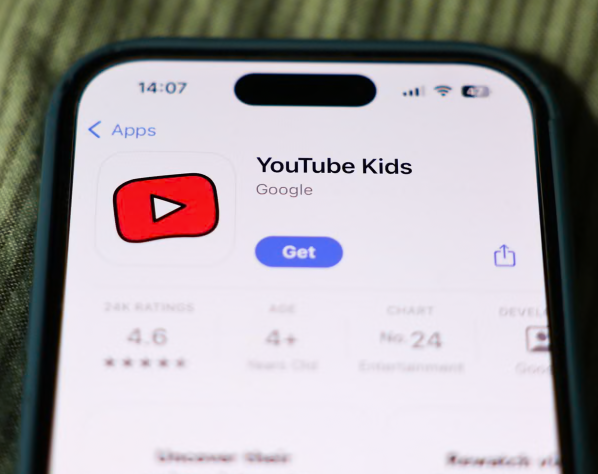
According to people familiar with the matter, the government’s significant expansion of a social media ban for those under 16 could inadvertently result in restrictions on YouTube Kids and various other sites previously thought to be exempt.
A source close to the negotiations indicated that the regulations currently under consideration could affect as many as 150 platforms—including gaming sites like Lego Play—when the ban takes effect in March.
The regulations are set to be presented to the Cabinet for approval this week, with Culture Secretary Lisa Nandy expected to introduce them to Parliament in December.
It is understood that ministers favor a comprehensive, all-encompassing approach to prevent users from circumventing the ban. Critics of similar social media restrictions in Australia have pointed out that teenagers have simply migrated to new platforms or devised creative ways to communicate via other, seemingly innocuous websites.
Tech companies, industry groups, and lawmakers have been informed that the government’s current proposal focuses on recommendation systems and user-generated content.
If these proposals are adopted, Spotify—which features some user-generated content and provides recommendations for music or podcasts—could technically be subject to restrictions. However, the music streaming platform has sought assurances that it will not face a ban, arguing that it is not primarily a social media platform.
An industry insider remarked: “We all want to ensure the safety of young people online. The proposals must be practical and feasible. The current situation—where companies like eBay, Lego, YouTube Kids, and Spotify have not clearly indicated whether they will comply—is unsustainable. The sooner detailed guidelines are issued, the better.”
Another observer commented: “Recommendation systems are embedded across the entire internet. The scope of this regulation is extremely broad—but that is intentional; the aim is to create a wide-reaching regulatory framework with rigorous legal language, designed to cover any eventuality.”
In the coming days, the Department for Culture, Media and Sport (DCMS) and Downing Street are expected to brief companies on the final proposals.
When Keir Starmer announced the ban in June, the government stated that it would not apply to educational services, e-commerce platforms, or music streaming services, adding that there would be “a clearly defined list of exemptions, which will be kept under review.”
However, it is understood that tech companies are informing the government that removing recommendation algorithms would render their websites inoperable.
These regulations will not require a full legislative process in the House of Commons; instead, they will be introduced as supplementary provisions to the Children’s Wellbeing and Schools Bill.
Ministers also plan to introduce a second wave of regulatory measures in the spring, which could encompass e-commerce platforms such as Vinted, eBay, and Depop. Lawmakers and campaigners have raised concerns with Nandy, arguing that teenagers and sexual predators could devise novel ways to communicate on these sites—platforms that allow interactions between anonymous or unknown users.
In an interview on Sunday, Nandy confirmed that the government is considering bringing Vinted and other e-commerce platforms under the scope of regulation. On Tuesday, officials held an urgent conference call with retailers, some of whom reportedly expressed strong opposition to the proposal.
Another industry source remarked that it is illogical for the government to continue permitting instant messaging apps like WhatsApp and iMessage while seeking to regulate platforms such as Vinted and eBay simply because they incorporate messaging features.
Ian Murray, the minister responsible for online safety, also confirmed to lawmakers last week that the government is examining these sites—specifically their “features and functionalities”—as part of the development of the next phase of regulation, which is expected to be unveiled next spring.
He stated: “Some platforms that might otherwise fall outside the scope of regulation could be brought within its ambit if they introduce new features—features we deem distinct from those found on the social media platforms we are currently regulating. For instance, Spotify has introduced a feature on its platform that allows for conversations with strangers.”
Murray informed lawmakers that platforms that redesign their services to remove harmful or addictive features could potentially be removed from the restricted list.
“The path back to compliance is to align with the regulations, thereby moving outside the scope of oversight,” he said. “While easier said than done, this remains the guiding principle for our approach.”
He noted that platforms such as YouTube Kids and Lego Play would need to demonstrate that they do not employ harmful algorithms.
“Is there a way to prevent the harms that can arise from algorithms, recommendation systems, comment sections, or interactions with strangers?”
“If you build a service that fully complies with the regulations, should it then be accessible to those under 16? As it stands, the government’s position is ‘yes’—provided there is an ‘opt-out’ mechanism in place.”
A company insider indicated that Spotify’s messaging functionality is restricted to interactions with known friends and family members who are 16 years of age or older.
Industry bodies representing the tech sector have argued to the government that platforms like YouTube Kids cannot function effectively without recommendation systems, making it impossible for them to implement an “opt-out” mechanism.
The UK’s Department for Digital, Culture, Media and Sport (DCMS) has been contacted for comment.